

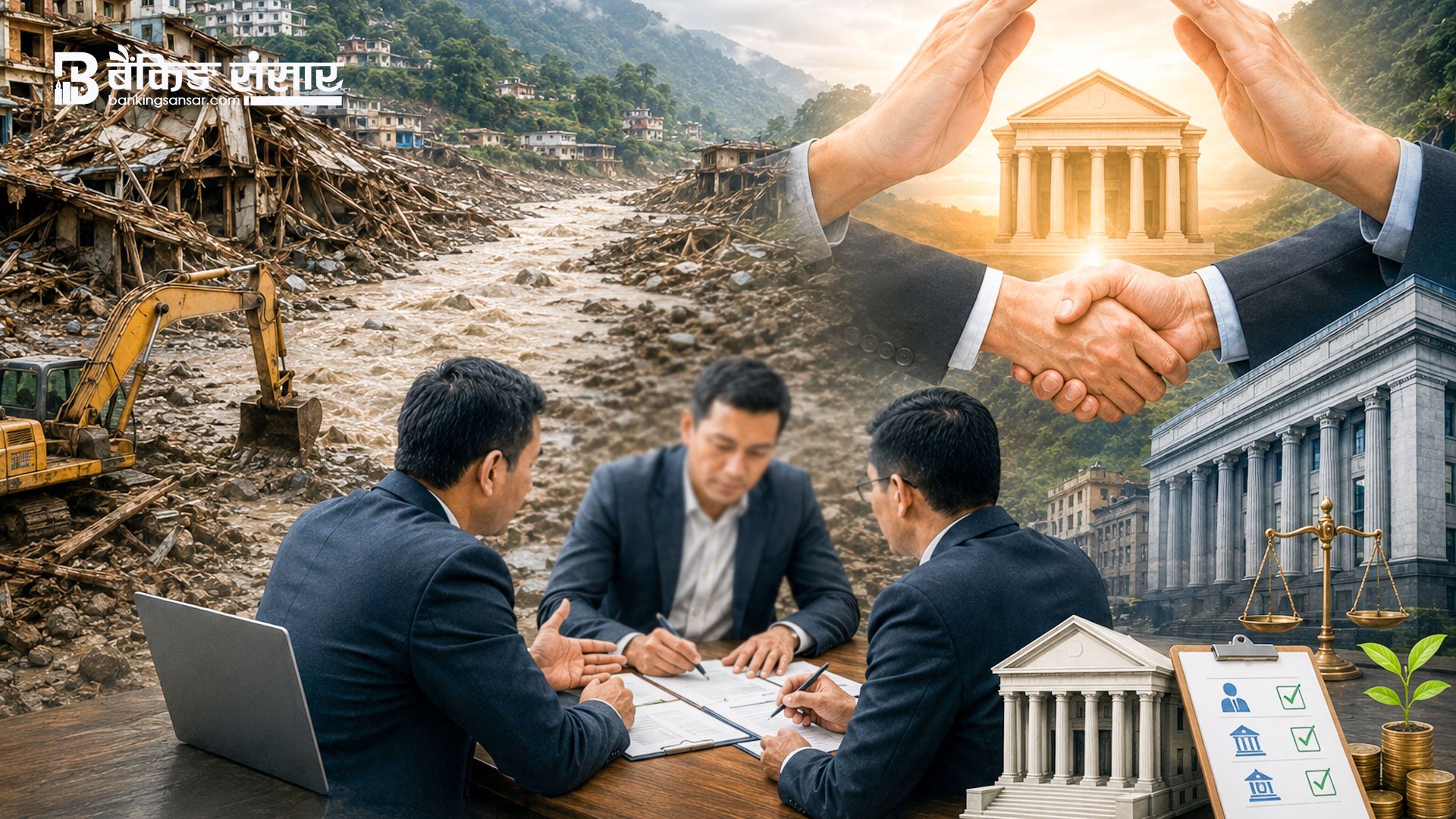
Kathmandu. The devastating floods in Rasuwa swept away houses, farms, and businesses. Some people’s wealth accumulated through years of earnings turned into a barn. Some had no shops, no hotels, no cowsheds. The land mortgaged in the bank has become a barn. The flood has swept away the cash, gold and silver kept inside the house.
However, the flood has not swept away only this. It has also washed away the ability of many citizens to repay the loan. Now is the time for the state and especially the Nepal Rastra Bank to think seriously about this issue. While taking a loan from the bank, the citizens had mortgaged their house, land, business or other property. It was the value of the collateral, so the bank gave the loan. After taking the loan, the citizens used to pay installments and interest from doing business, farming, working or other income. But now the situation has changed.
The property on the basis of which the loan was taken is not the same property. The business from which the income was taken is not a business. The field from which the production was done is not a farm. Some do not have a house. Some do not have a source of income.
Then the question arises – how will the borrower repay the loan?
The bank has given the loan, the borrower has to repay. This is the general banking principle. But is it justified to put pressure on you to pay the installment, pay the interest, even after the natural calamity destroys everything?
Legally, the debt obligation cannot be eliminated. However, humanely, the state cannot ignore the real condition of the debtor.
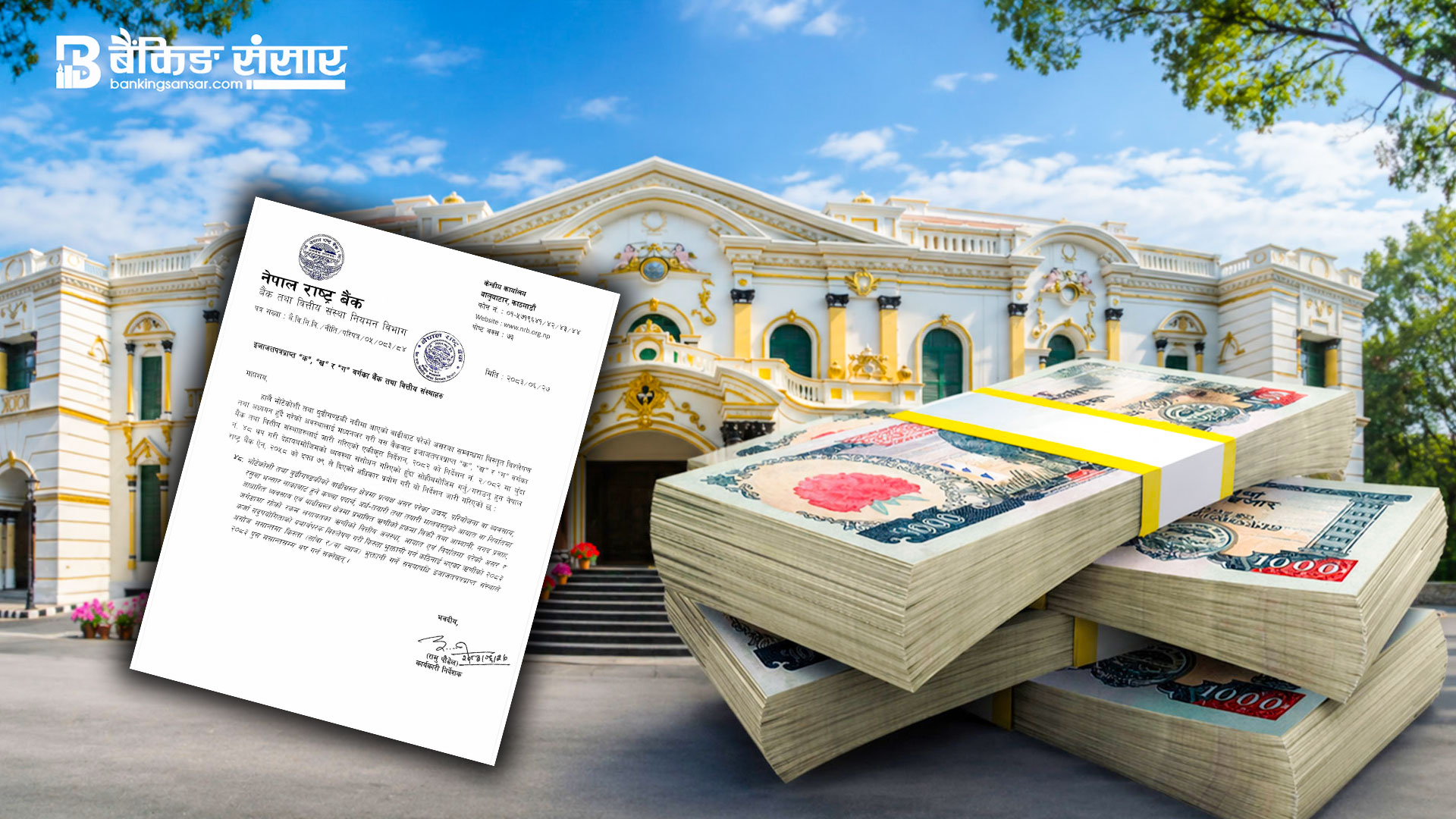
Banks and financial institutions have invested billions of rupees in the affected areas of Rasuwa-Nuwakot district, according to preliminary data. The affected 16 bank branches alone have loans worth more than Rs 2.42 billion.
Not all of these amounts will be bad loans. However, there is a clear risk that the floods will affect the repayment capacity of a large number of borrowers due to the damage done to the borrower’s source of income, business and mortgage.
Therefore, the need of the hour is not to find the borrower and collect the installment, but to create an environment for the borrower to stand again.
What should the Rastra Bank do?
Nepal Rastra Bank should immediately bring special provision for the affected borrowers.
First, the borrower who has actually been affected by the floods should be identified. A borrower who has lost his house, business, agricultural land or has lost his main source of income should not be treated as an ordinary debtor.
Second, the debt restructuring and rescheduling of such borrowers should be made easier. There is a need to extend the tenure of the loan, postpone the installments for some time and reschedule the repayment schedule. In the past, there have been instances of debt restructuring and rescheduling of loans to borrowers affected by natural calamities.
Thirdly, there is a need for a special concession in interest. If the citizens who do not have a house, have lost their business and have lost their source of income, then the interest on interest is added immediately, then it will be more difficult to rehabilitate.
Fourth, the issue of mortgage should be looked at in a new way. If the mortgaged land has been flooded, then increasing the pressure on the borrower by showing the value of the mortgage only on paper is not the solution. The government should coordinate with the local level and assess the actual damage.
Fifth, the government can create a special revival fund in collaboration with the Rastra Bank and the banking sector. Concessional loans, interest subsidies or risk sharing can be arranged to restart businesses that are completely damaged and cannot recover immediately.
Sixth, where insurance claims are possible, there is a need for a mechanism to expedite the payment of the insurance amount. The amount of insurance can reduce the risk of both the borrower and the bank.
Debt forgiveness is not the only solution
Some are demanding that all the loans of the flood victims be waived. Looking at the condition of the victims, such a demand is also emotionally natural. However, waiving all the loans at once may not always be a practical solution from the point of view of banking system and financial discipline.
The solution should not be found in the twin poles of ‘forgive all debts’ or ‘recover all debts’.
Who has suffered how much? Whose income has been completely stopped? Whose business can be restarted? Whose mortgage has been completely destroyed? Who has been insured? Who can be reinvested?
On the basis of these questions, the borrower should be classified and the solution should be found.
Families that have been completely destroyed need separate relief. Businesses that can be refinanced need a separate refinancing. Refinancing may be sufficient for those who are partially damaged. Banks should also be protected
It should not be forgotten that bank money is ultimately the deposit of the common man.
Therefore, while giving relief to the borrowers, the stability of the banking system should also be seen simultaneously. If the bad loans of the banks increase later by ignoring the huge credit risk in the affected areas, then its impact will also be on the economy.
Therefore, the role of the central bank is decisive here.
The central bank should not just tell the banks to ‘raise the loan’. It should make a policy of ‘raise the victim, save the business and protect the loan as much as possible’.
Now we need a resurrection, not a hard recovery
The people of Rasuwa have already paid the price of natural calamities. Some have lost their families, some have lost their homes, some have businesses and some have earned a lifetime.
Now they should not be subjected to another calamity – bank installments and interest.
Not being able to repay the loan and not wanting to repay the loan are different things. This difference should be understood by the central bank, the banks should understand and the state should also understand.
Today, if the borrower does not have money in his hands, the bank can auction his property and raise the money. But that does not rebuild the life of the citizen. On the contrary, if the state makes the citizen able to earn again, then the same citizen can pay the loan tomorrow, pay taxes and contribute to the economy.
So the main question now is not ‘How to raise the loan?’
The main question is, “How do we recover the people who have lost everything to the floods?”
In response to this, the bank, the central bank and the government should stand together. Because the floods in Rasuwa have not only washed away houses, fields, mortgages, gold and money. It has also washed away the ability of thousands of families to repay their loans. Now it is also the responsibility of the state to restore that capacity.