
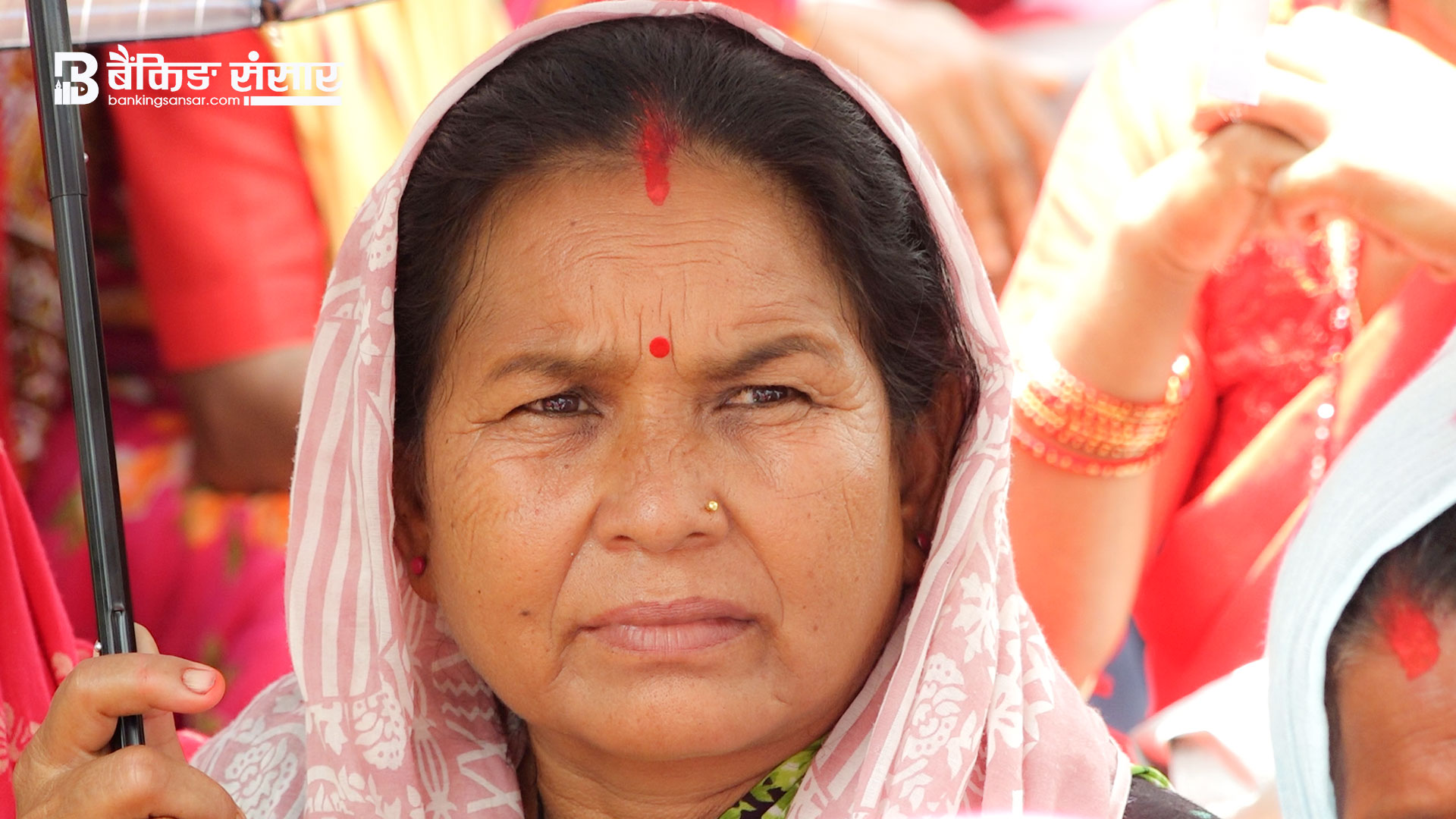
Kathmandu. The hunger strike waged by the microfinance victims at Maitighar Mandala to put forth their demands continued on Friday. KATHMANDU: The hunger strike that began on Tuesday under the leadership of the Struggle Committee against Microfinance and Financial Exploitation has continued at Maitighar Mandala in Kathmandu on Tuesday.
Similarly, a victim of Rupandehi Constituency No. 4, who was staging a hunger strike, said that thousands of people like him have suffered economically, mentally and socially after taking loan from microfinance institutions.
According to him, although the microfinance institutions show loan of Rs 100,000 on paper, they provide only Rs 80,000 to Rs 85,000 in hand after deducting service charge, deduction under different headings and other amounts. “We have been agitating continuously for the last five years. We are demanding justice. When they take a loan of Rs 100,000 from microfinances, they give Rs 80,000-85,000. Tamasuk pays one lakh rupees. ’
According to him, although loans are provided for agriculture and livestock, they do not provide training, counseling or technical assistance to operate the business. He said that although it takes time to earn income from poultry, goat and buffalo rearing, they are pressurized to pay the installments within 28 days. “Even if you take a loan for farming or animal husbandry, it takes time to earn income,” he said. Big and small businessmen do not have the same income, but they all think the same. It takes at least 42 days for us to raise and sell chickens. But the installment has to be paid within 28 days. When there is no income, there is a compulsion to take another loan and pay installments. ’
He said that it would be more difficult to pay the installments as a daily wage earner does not have regular income. He said that microfinance institutions have been charging exorbitant interest rates and various additional fees.
He said he had to sell his tractor after taking loans from various microfinance institutions. “I sold three tractors to repay the loan, but the loan could not be repaid. Gradually, I got a loan of about seven lakh rupees,” he said. He said that along with the economic crisis, mental stress has also increased. He said that the employees who come to collect the loan behave abusively and that even if they die of poison if they do not repay the money, nothing will happen to the family.
“Hearing such things makes you lose the will to live. The government should understand our situation. It’s not that we don’t want to repay the loan, but we want the interest and additional charges that are out of the law to be removed, but the actual calculation should be done,” he said. He also urged the government to provide relief to the microfinance survivors as well as make arrangements for permanent employment. According to him, it is difficult to run the family even though he can pay the installments if he has regular employment.
Similarly, another victim said that the microfinance institutions have been issuing loans without training on the basis of citizenship certificates, deducting the loan amount under various headings, charging high interest and trapping the borrowers in the cycle of debt. According to the victims, the microfinance institutions have been deducting Rs 15,000 to Rs 20,000 under different headings while approving a loan of Rs 100,000. He said that the amount deducted would be returned after the completion of the installment, but there is no clear account of it.
According to him, although we were encouraged to take up buffalo rearing, poultry farming and small businesses, most of the borrowers could not operate their business due to lack of adequate training and planning.
He said that due to the increase in the burden of loans on both microfinance and meter interest, the situation of land auction is increasing. Stating that they were not in favour of not repaying the loan, he demanded that the interest charged against the real calculations and rules should be returned. According to them, the interest rates are higher than the limit set by Nepal Rastra Bank, ranging from 18 percent to 22 percent and in some cases up to 36 percent.
His main demand is to solve the problems of the victims across the country and implement a one-time loan waiver program. He said it would be easier for many borrowers to pay off their outstanding debts if the government investigated them fairly. The first round of talks between the agitating microfinance victims was held on Thursday but could not reach to a conclusion. The government has claimed that the initial talks are positive and solution-oriented.
However, the victims have started an indefinite hunger strike saying that the government has not implemented the Supreme Court’s mandamus order. The Supreme Court (SC) had issued a mandamus order to the government, Nepal Rastra Bank and Microfinance Bankers’ Association to implement the agreement reached to resolve the problems of microfinance victims.
The victims have resorted to the protest after the government did not show any interest in implementing the verdict of the Supreme Court.